 Pagdandi
Stories › Trails
Valley of Flowers: the trek behind the trail
A meadow a mountaineer stumbled into in 1931, now a World Heritage Site. Here's the real trek your companion walks, stop by stop.

High in Uttarakhand's Chamoli district, a glacial valley turns into a carpet of colour every monsoon. It's one of the most loved treks in India, and one of the six trails you can walk in Pagdandi.
A valley found by accident
In 1931, the British mountaineer Frank Smythe was coming down from a climb of Kamet when his team lost its way and walked into a valley full of flowers. He came back to study it and wrote a book about it, The Valley of Flowers.
Today the valley is a national park and, together with the neighbouring Nanda Devi National Park, a UNESCO World Heritage Site. Hundreds of species of alpine flowers grow here, including the Himalayan blue poppy and, higher up, the brahma kamal.
The trail, stop by stop
The trek in the app follows the classic route, with the same stops and altitudes:
- Govindghat (1,828 m) — the start, by the Alaknanda river, where the road ends.
- Ghangaria (3,048 m) — 9 km and over 1,200 m of climbing later, the base village for both the valley and Hemkund Sahib.
- Valley of Flowers (3,658 m) — about 3 km on from Ghangaria, through the park gate and into the meadows.
- Hemkund Sahib (4,329 m) — a steep climb to the gurdwara beside a glacial lake, one of the highest places of worship in the world.
- Pushpawati river bed — the Pushpawati flows down through the valley. Then the long walk back to Govindghat.
On the ground that's about 38 km. Because the climbs and descents are real, the app counts it as about 80 effort km: a kilometre up a mountain takes more out of you than a kilometre to the market. (We explain that in Effort km: why a mountain kilometre counts for more.)
When people really go
The park usually opens in June and closes in October. The flowers are at their best in July and August, during the monsoon, which also means rain, clouds and slippery paths. Trekkers stay in Ghangaria and visit the valley and Hemkund Sahib on separate days.
Walk it from home
You don't need a monsoon holiday to make progress. Every step you take, at the office, around the block, on the way to the station, moves your companion along this exact route, and each stop sends you a postcard when you reach it.
Pick the Valley of Flowers on the Trails tab, and see how many days it takes you to reach Ghangaria.
More stories
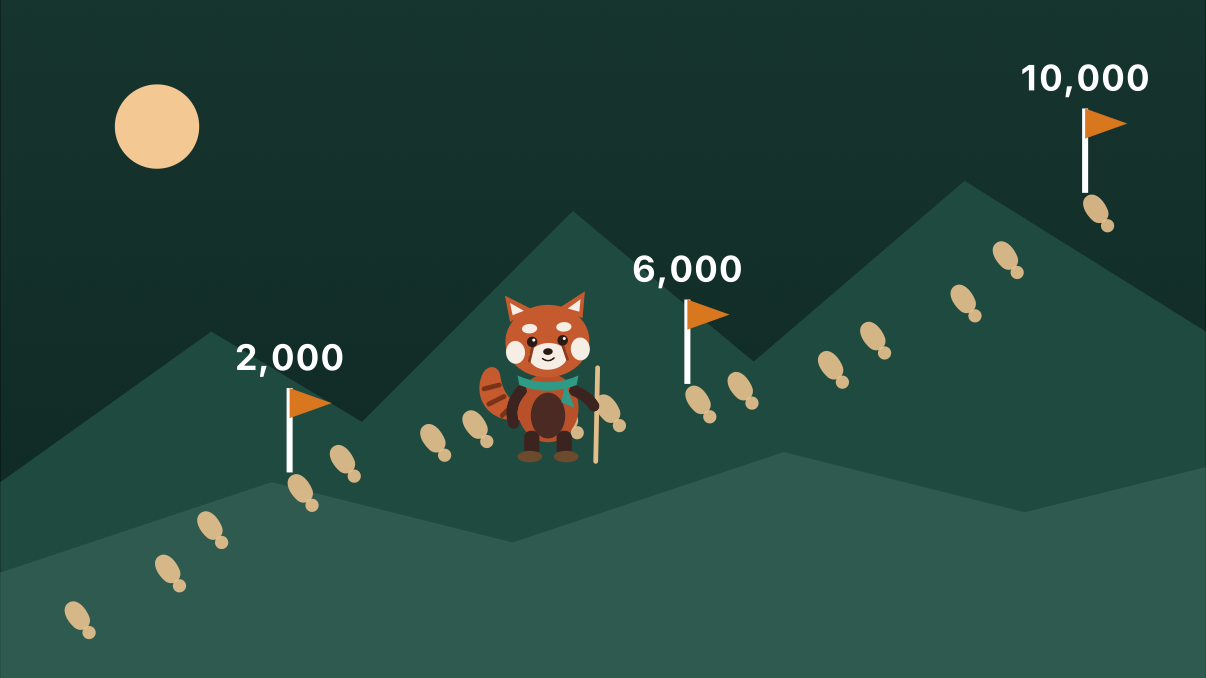
Do you really need 10,000 steps a day?
The famous number started as a pedometer's name, not a medical guideline. Here's what the research says, and how to pick a goal you'll keep.

Race your friends: tracks, laps and Saathi groups
Every step challenge is now a race round a 1 km circuit: Marine Drive, Lodhi Garden, Munnar or Hussain Sagar. Here's how it works, and how to get your people in.
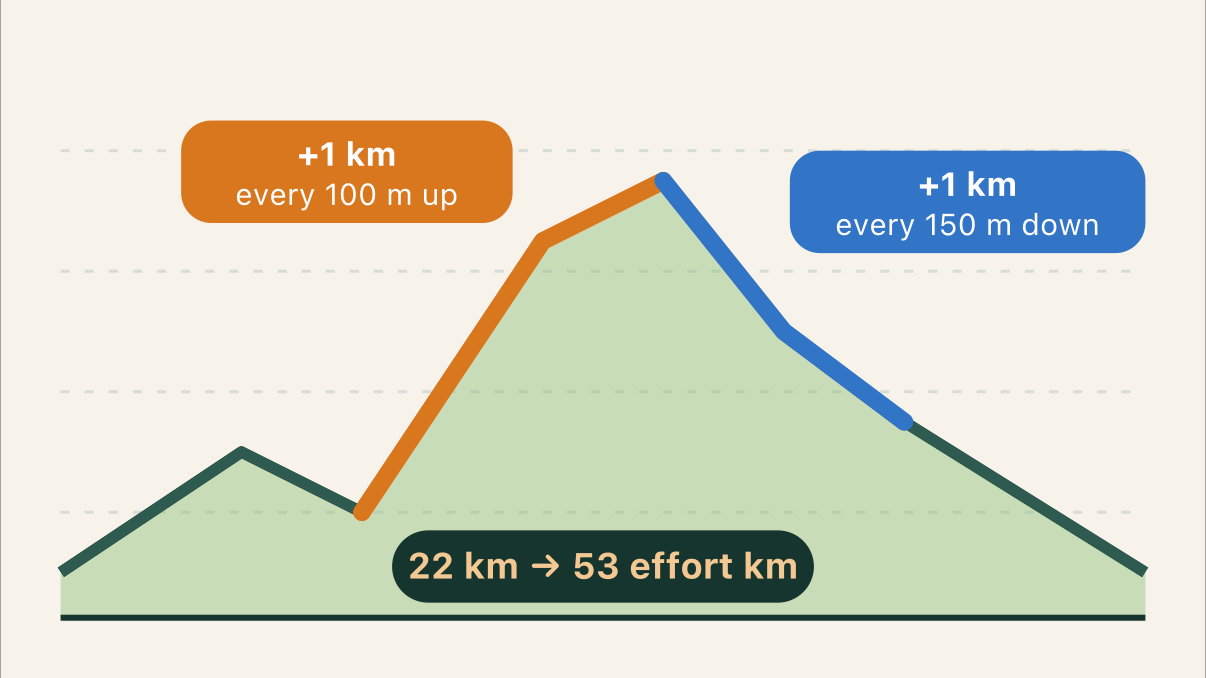
Effort km: why a mountain kilometre counts for more
Walking 22 km on a flat road isn't the same as 22 km up Kedarkantha. Here's the old Swiss rule Pagdandi uses to make treks feel real.